
How to Beat an Escape Room: 13 Expert Tips from Game Masters
Our game masters have watched thousands of groups attempt escape rooms. Here are the 13 things winning teams do differently — straight from the people who built the puzzles.
Escape Experience Team
Escape Experience
Our game masters at Escape Experience have watched over 50,000 groups attempt our rooms across Nashville and Chattanooga. They've seen first-timers crack the code in record time and experienced players flame out with ten minutes left on the clock. The difference between escaping and not? It's rarely about being the smartest person in the room. It's about how you play. Here are 13 tips straight from the people who designed the puzzles, built the sets, and watch every game unfold from behind the monitors.
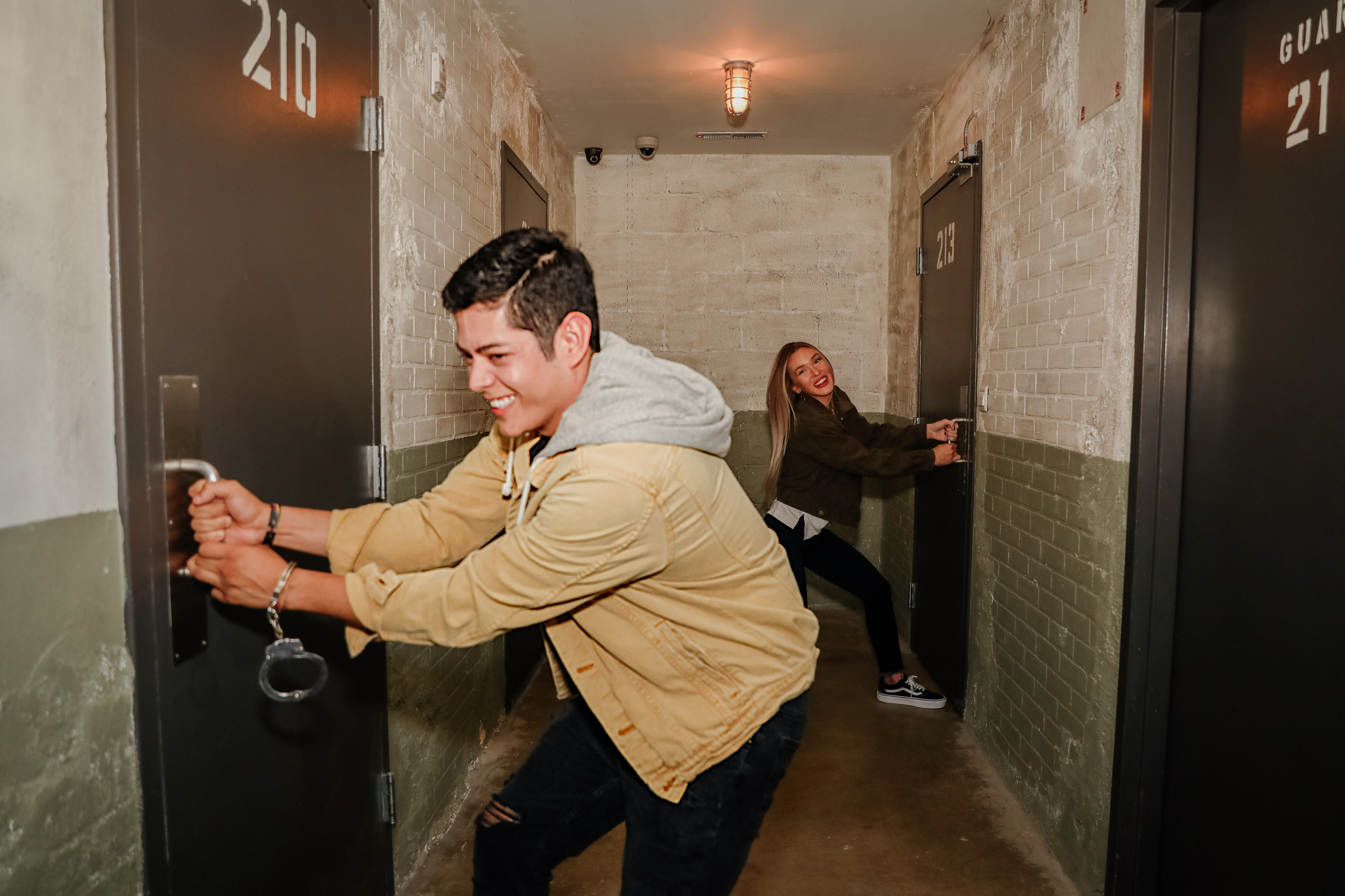
1. Listen to Your Briefing Like Your Escape Depends on It
Because it does. Before every game, your game master gives you a briefing that covers the story, the rules, and — if you're paying attention — a few breadcrumbs about how the room works. We're not just reading a script to kill time. In The Inheritance, for example, the backstory directly ties into how certain puzzles connect. Groups that zone out during the intro often spend the first ten minutes confused about things we literally just explained.
Pro tip: Ask questions during the briefing. Your game master wants you to succeed. If something isn't clear, say so before the clock starts.
2. Search the Room Thoroughly — And We Mean Thoroughly
The first three minutes of any escape room should be a full sweep. Open every drawer. Check every shelf. Look under things, behind things, and inside things. You'd be amazed how many groups at our Search for the Cure room in Chattanooga miss a critical clue that's sitting in plain sight because nobody bothered to check a specific area.
Don't just glance — investigate. Run your hands along surfaces. Open things that look like they open. If it's not bolted down or labeled "do not touch," it's fair game.
3. Create a Clue Dump Zone
This is one of the biggest differences between teams that escape and teams that don't. Winning teams designate a single spot — a table, a bench, a clear area on the floor — where every found item goes. Keys, notes, symbols, loose objects — everything lands in one place where the whole team can see it.
In C-Block Prison Break, there are multiple items scattered across the space that need to come together at different stages. Groups that pocket things or leave clues where they found them waste massive amounts of time hunting for items they already discovered.
4. Divide and Conquer — But Stay Connected
In The Inheritance, groups that split up and work on multiple puzzles simultaneously escape 40% more often than groups that huddle around one puzzle at a time. The room is designed with parallel tracks — puzzles that can be solved independently before their solutions converge.
The key is communication. Split into pairs or small groups, tackle different areas, but call out everything you find. "I've got a four-digit code over here!" "There's a color pattern on this wall!" When you share information in real time, someone across the room might have the piece that completes your puzzle.
5. Say Everything Out Loud
This is the single most important tip on this list. The number one reason teams fail isn't because the puzzles are too hard — it's because someone found something and didn't tell anyone. In our Bunker room in Chattanooga, we've watched players discover a crucial clue, examine it quietly, set it down, and walk away. Meanwhile, another player across the room has the matching piece and never knows.
The rule is simple: if you see it, say it. Even if you don't know what it means. Especially if you don't know what it means. Someone else on your team might instantly connect it to something they found.
6. Don't Get Tunnel Vision on One Puzzle
Here's a pattern our game masters see every single day: a player finds a challenging puzzle and refuses to move on. They spend 15 minutes trying to brute-force a combination lock or decode a cipher while the rest of the room sits unsolved. Meanwhile, the clue they need to solve that puzzle is sitting in a completely different area — one they haven't explored yet.
If you've been working on something for more than five minutes without progress, step away. Move to a different puzzle. Let someone else take a crack at it. Fresh eyes solve more puzzles than stubborn determination.
7. Use Your Hints — That's What They're For
At Escape Experience, your game master is watching your game in real time and can send you hints when you're stuck. Use them. Hints aren't a penalty. They're part of the experience. We designed the hint system to keep you in the flow of the game, not to punish you for needing guidance.
The teams with the best escape times? They ask for hints early when they're stuck, keep their momentum going, and finish with time to spare. The teams that refuse to ask for help out of pride? They often run out the clock staring at a puzzle they could have solved ten minutes earlier with a small nudge.
8. Keep Track of What You've Already Used
Once a key opens a lock, that key is done. Once a code works, that code is done. A common trap — especially in rooms like C-Block Prison Break where there are multiple locks and keys — is trying the same key or code on something it's already opened. Flip used keys upside down, set used items aside, or just announce "this one's done" to the group.
This sounds obvious, but under the pressure of a ticking clock, you'd be surprised how much time teams waste re-trying things that have already been solved.
9. Think Logically, Not Cinematically
You don't need to pull books off shelves hoping for a hidden lever (please don't — our set designers worked hard on those). You don't need to unscrew light fixtures or move heavy furniture. Escape rooms are built around logical puzzles, not physical tricks.
If something requires you to use excessive force, you're on the wrong track. Our rooms at every location — Nashville on Union Street, Chattanooga Downtown, and the Choo Choo — are designed so that everything works smoothly when you have the right solution. If you're forcing it, step back and reconsider.
10. Manage Your Time in Phases
Most escape rooms at Escape Experience give you 60 minutes. Think of it in three phases:
Minutes 1-10: Explore everything. Sweep the room, gather clues, get oriented. Don't try to solve anything yet — just collect information.
Minutes 10-40: Solve aggressively. This is your main working phase. Tackle puzzles, communicate constantly, and use hints if you stall.
Minutes 40-60: Shift into urgency mode. If you haven't progressed to the later stages of the room, ask for a hint. Don't let pride eat your clock. In Runaway Train at our Choo Choo location, the final sequence requires clear heads and quick execution — you don't want to reach it with only two minutes left.
11. Don't Overthink It
Engineers, lawyers, and analysts — we love you, but you're the most likely to overthink a puzzle that has a simple answer. Our game masters have watched PhDs build elaborate theories about a lock combination when the answer was literally written on the wall in a slightly different color.
Escape rooms are designed to be solvable by anyone. If your solution requires a graduate-level understanding of cryptography, you've gone too far. Look for the straightforward answer first. Nine times out of ten, that's the right one.
12. Choose Your Team Size Wisely
More people doesn't always mean better. The sweet spot for most of our rooms is 4-6 players. That's enough to divide and conquer without creating chaos. With too many people, you get crowding, cross-talk, and the inevitable "too many cooks" problem where three people are working on the same puzzle while others stand around.
If you're booking with a larger group — say 8-10 for a team building event — consider splitting across multiple rooms and racing each other. The competitive element adds a whole new layer of fun, and each team gets enough space to contribute meaningfully. In Nashville, C-Block Prison Break: Head-to-Head was built for exactly this: two identical cells, up to 16 players, both teams racing the same 60-minute escape at the same time.
13. Stay Positive and Have Fun
This might sound like generic advice, but our game masters will tell you it's the most predictive factor of all. Teams that laugh when they get stuck, encourage each other after wrong guesses, and celebrate small victories escape at dramatically higher rates than teams that get frustrated or start blaming each other.
In Search for the Cure in Chattanooga, we've seen groups that were hopelessly behind at the halfway mark rally and escape with seconds to spare — purely because they stayed loose and kept working together instead of shutting down. The energy you bring into the room matters more than any individual puzzle-solving skill.
Ready to Put These Tips to the Test?
Now that you know what winning teams do differently, it's time to prove it. Book a room at Escape Experience and see if you can beat the clock. Whether you're a first-timer or a seasoned escape artist, we've got a room that will challenge you:
- Book Nashville — 501 Union Street
- Book Chattanooga Downtown — 224 Broad Street
- Book Chattanooga Choo Choo — 16 Choo Choo Ave
Locally owned, 4.9 stars, and thousands of successful escapes since 2014. Our game masters are ready to watch you win — or at least give you a really good hint when you need one.
Escape Room Tips: Frequently Asked Questions
How long do you get in an escape room?
Every Escape Experience game is 60 minutes. Public games are $34.99 per person for groups of 2 to 8 players, and private booking upgrades are available at a premium rate if you'd like the room to yourselves.
How many hints can we ask for?
As many as you need. Hints are unlimited and there's no penalty — your game master is watching and will nudge you in the right direction so you stay in the fun instead of stuck.
What's the single best strategy to beat an escape room?
Communicate constantly. Call out everything you find, keep solved and unsolved items separated, and don't hoard clues — the team that talks the most almost always escapes the fastest.
Do we need experience to do well?
Not at all. Most groups are first-timers. These tips plus your game master's hints level the playing field, and the rooms are designed to be challenging but solvable.
How many people should we bring?
Rooms fit 2 to 8 players, with 4 to 6 being the sweet spot for teamwork. More hands and eyes help, as long as everyone has room to contribute.
Get More Escape Room Tips
Join our newsletter for behind-the-scenes stories, tips for first-timers, and updates on new rooms.
1-2 emails per month. Unsubscribe anytime.
Ready to Escape?
Book your escape room adventure at one of our Tennessee locations.
Related Articles

The Last-Minute Father's Day Gift That Doesn't Feel Last-Minute (Nashville)
Out of time to plan the perfect Father's Day in Nashville? Get him a gift card and let him pick the date. An Escape Experience gift card never expires, gets delivered instantly via email, and beats another tie or another mug every year of the week.

Father's Day in Chattanooga: 7 Adventure Gifts for the Dad Who Has Everything
Dad already has the polo shirts, the wallet, and the cordless drill. This Father's Day, give him a story instead. Here are seven adventure gifts in Chattanooga, ranked by how often the dad in question still talks about it months later.
Things to Do in Nashville This Weekend: Your Complete Guide
From Broadway honky-tonks to hidden gems in East Nashville, here's your insider guide to the best things to do in Nashville this weekend — including the one downtown activity most visitors miss.